

Waterproof trainers, outdoor shoes and waterproof Chelsea boots are useful alternatives to wellies for rainy days, wet grass and everyday outings. The right choice depends on where you walk, how much coverage you need and whether you prefer a casual trainer or a smarter leather style.
Wellies certainly have their place, but sometimes you just want something you can wear for a dog walk, pop to the shops in and keep on for the rest of the day.
As autumn arrives, ordinary trainers can quickly leave you with wet socks—even when it hasn’t actually rained that morning. Dew-covered grass is often enough. Fortunately, keeping your feet dry does not have to mean wearing knee-high rubber boots everywhere.
Here are some options from our range that we would consider.
What Can You Wear Instead of Wellies?
For everyday wet weather, there are three useful places to start:
| Footwear | When we would choose it | What to keep in mind |
|---|---|---|
| Waterproof trainers | Casual outings, wet pavements and shorter walks on maintained paths | Water can still enter over the low opening |
| Waterproof slip-on outdoor shoes | Quick dog walks, garden jobs and everyday outdoor tasks | Check the sole suits the ground you use |
| Waterproof Chelsea boots | Days that combine outdoor time with work, shopping or a pub visit | Choose a specifically waterproof model |
| Taller waterproof boots or wellies | Deep mud, long wet grass and conditions needing more coverage | Low shoes cannot provide the same protection above the ankle |
Think about your usual route rather than buying for the occasional worst-weather day. A pavement walk with a short stretch across grass needs different footwear from a muddy field walk.
Waterproof Trainers for Everyday Wear
If you prefer the look and feel of trainers, a waterproof pair is an easy way to make your everyday footwear more practical.
The Ariat Ranch Runner Waterproof Trainers have waterproof, breathable DRYShield construction, a cushioned EVA midsole and a durable Duratread outsole. They keep the casual trainer appearance, so they are easy to wear with jeans when your day involves more than walking the dog.
You can find them in both men’s Ranch Runner Waterproof Trainers and women’s Ranch Runner Waterproof Trainers.
We would consider them for everyday outings, wet pavements and maintained paths where you want waterproof footwear without a tall boot.
Check that you are choosing the waterproof version. Similar-looking trainers within a range may have different construction, so the individual product description matters.
Waterproof Slip-On Shoes for Outdoor Jobs
Sometimes you need something you can pull on quickly before heading outside.
The Ariat Terrain Ease Waterproof Shoes for men are another option to look at if you prefer an outdoor shoe to a trainer. Their slip-on style is convenient for everyday outdoor jobs and quick trips into the garden.
This type of footwear is worth considering if you are regularly going in and out of the house and want something more substantial than your usual casual shoes.
As with any outdoor footwear, look at the sole as well as the waterproofing. Keeping water out is only one part of choosing a shoe that works for your routine.
Waterproof Chelsea Boots for Town and Country
If you want something a little smarter, waterproof Chelsea boots can be a useful middle ground.
They work with jeans, country trousers and everyday outfits, while giving you more coverage around the ankle than a low trainer.
The Ariat Wexford Waterproof Chelsea Boots are available in men’s Wexford boots and women’s Wexford H2O boots. We would consider this style for days that involve a short walk outdoors followed by shopping, work or lunch out.
The important word is waterproof. A leather Chelsea boot is not automatically waterproof simply because it looks sturdy. Check the specification of the exact style you are buying.
Are Waterproof Shoes Suitable for Wet Grass?
Yes, footwear with waterproof construction can be suitable for wet grass, provided water does not enter through the opening.
That second part is easy to overlook. A waterproof trainer may keep moisture from passing through its upper, but long wet grass can soak your socks or trousers above the shoe. Water can then find its way inside.
For short grass and maintained routes, low waterproof footwear can be practical. For longer wet grass or deeper mud, choose more coverage.
Our waterproof dog-walking boots guide covers boot options in more detail.
Waterproof and Water-Resistant Shoes: What Is the Difference?
Waterproof footwear is designed to prevent water passing through its construction under its intended conditions. Water-resistant footwear offers more limited protection and may let moisture through with sustained exposure.
A water-resistant trainer might cope with a brief shower but still leave you with damp feet after walking across wet grass.
When comparing shoes, look for:
-
An explicit waterproof description.
-
Details of the waterproof membrane or construction.
-
A sole suited to your usual walking surfaces.
-
A comfortable fit with the socks you plan to wear.
-
Care instructions for the upper material.
Terms such as “outdoor”, “country” or “weather-ready” do not tell you enough on their own.
If you are comparing footwear with a GORE-TEX membrane, our guide to whether GORE-TEX is worth it explains how it works.
How to Choose the Right Pair
Start with Your Usual Walk
For pavements, errands and short walks, a waterproof trainer may be all you need. For outdoor jobs, a slip-on shoe may be more convenient. If you want footwear that looks smarter afterwards, consider a waterproof Chelsea boot.
For rougher routes, compare purpose-built walking footwear rather than choosing solely by appearance.
Check the Fit with Your Socks
Try shoes with the socks you will actually wear. Your toes should have room, your heel should feel secure and there should be no uncomfortable pressure across the foot.
Do not assume sizing up and adding thick socks will create a better winter shoe. A poor fit can make walking less comfortable.
Separate Waterproofing from Warmth
Waterproof does not mean insulated. A shoe can keep rain out without providing the warmth you want for standing around on a cold day.
Think about whether you will be walking continuously or spending longer periods still. Check the lining and insulation separately from the waterproof specification.
When Would We Still Choose Wellies?
For deep mud, very wet fields and long wet grass, wellies are often the more practical choice.
Their taller coverage protects more of your lower leg, and rubber exteriors are convenient to clean after muddy outings. Waterproof shoes are useful alternatives for everyday conditions, but they cannot give you the same coverage. 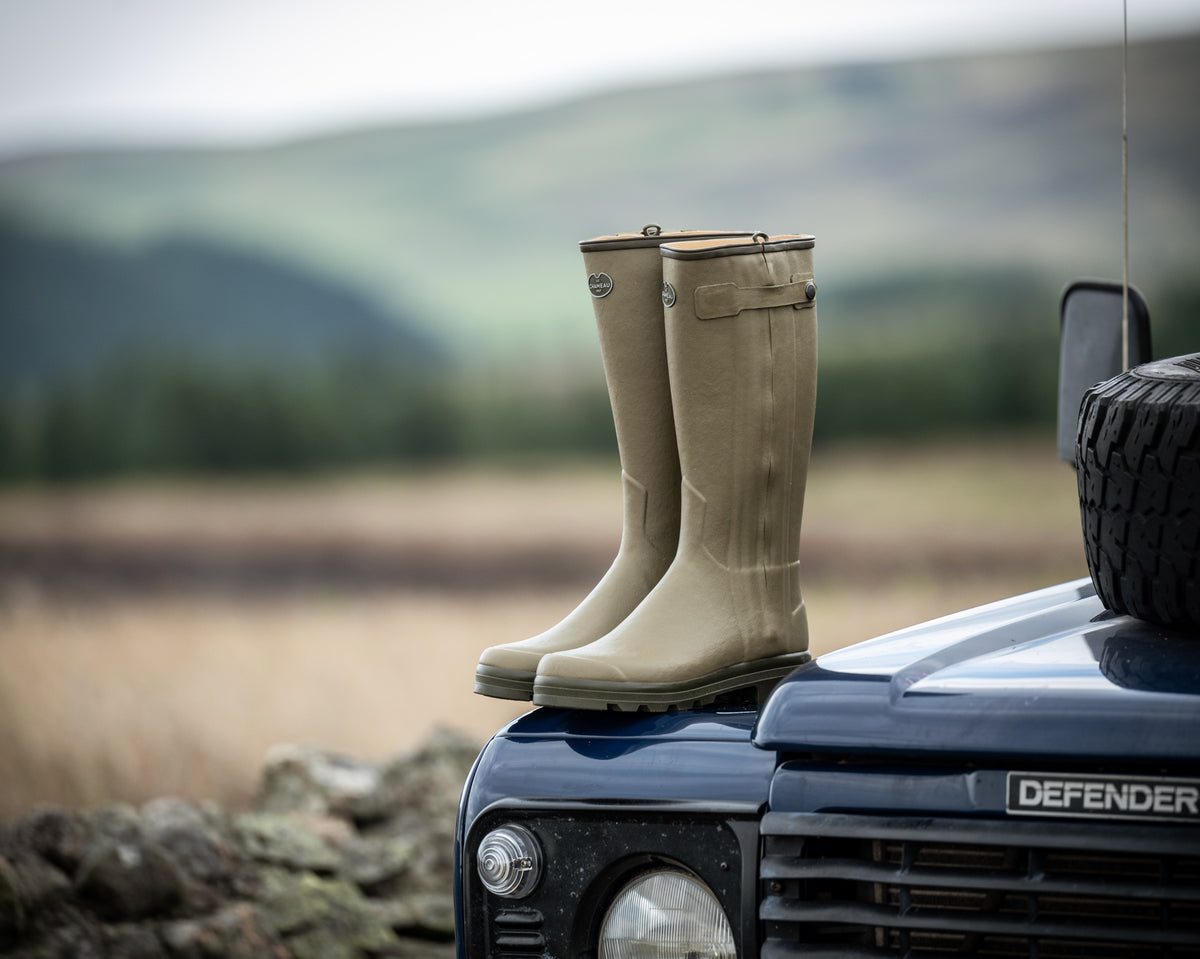
If your route calls for wellies, our Le Chameau buying guide will help you compare the different styles and linings.
Looking After Waterproof Shoes
A little regular care helps keep your footwear in good condition.
-
Remove dirt before it builds up.
-
Clean using the method recommended for the material.
-
Let footwear dry naturally, away from direct heat.
-
Use only care products suitable for the upper and any waterproof membrane.
-
Check soles and uppers for wear.
Smooth leather, suede and mixed-material trainers need different care. Follow the instructions for your particular pair rather than using the same treatment on everything.
Frequently Asked Questions
What are good alternatives to wellies for dog walking?
Waterproof trainers, outdoor shoes and waterproof ankle boots can work for shorter walks and maintained routes. For deep mud or long wet grass, taller waterproof boots or wellies usually offer more suitable coverage.
Can you get trainers that are waterproof?
Yes. Some trainers use waterproof construction, including the Ariat Ranch Runner Waterproof range. Check the exact model, as ordinary versions may look similar.
Are leather shoes waterproof?
Not automatically. Leather footwear may resist some moisture, but you should only treat it as waterproof when the manufacturer specifies waterproof construction.
Can waterproof shoes still get wet inside?
Yes. Water can enter over the opening, particularly in deep puddles or long wet grass. Dampness can also come from perspiration, so waterproofing alone does not guarantee dry socks in every situation.
Can waterproofing spray make ordinary trainers waterproof?
A suitable spray may improve water repellency, but it does not add a waterproof membrane or seal every possible entry point. Choose footwear designed to be waterproof if that is what you need.
Find Waterproof Footwear for Your Routine
If you mainly walk on pavements, maintained paths and short grass, you may not need wellies every time the weather turns.
Start with the conditions you use your footwear in most, then choose the fit and style that work for you. Browse our footwear collection, or visit us in Kibworth, Leicestershire, for help comparing the options.