
Walking Boots Buying Guide & Comparison

Walking Boots Buying Guide & Comparison
Compare walking footwear by height, terrain, support, waterproofing and fit—from low-cut shoes for easier paths to supportive hill and tall field boots.
The right walking boots depend on where you walk, how much ankle support you need and whether wet-weather protection or breathability matters most. A Farley has supplied country clothing and footwear since 1968; this guide uses the practical differences across our current range to help you choose with confidence.
Choose walking footwear by use
Start with the terrain and support you need, then compare the detailed models below.
Popular walking footwear compared
On mobile, swipe sideways to see the complete comparison and Shop button.
| Model | Best for | Height | Upper | Waterproofing | Sole/support | Fastening | Shop |
|---|---|---|---|---|---|---|---|
 MEINDL Caracas GTX Walking Shoes |
Daily paths, travel and lower-level trails | Low shoe | Waxed nubuck | GORE-TEX | Vibram Urban Walker | Laces | Shop |
 ARIAT Traverse Mid H2O Waterproof Boots |
Light country walks and everyday hiking | Mid boot | Lightweight mixed construction | Ariat H2O | Rugged outdoor outsole | Laces | Shop |
 ARIAT Skyline Summit Waterproof Walking Boots |
Women’s trail walking and uneven ground | Mid boot | Leather and technical upper | DRYMax | Duratread with EVA cushioning | Laces | Shop |
 MEINDL Bhutan MFS GORE-TEX Walking Boots |
All-year hill walking and demanding hikes | Supportive ankle boot | Nubuck leather | GORE-TEX | Meindl Multigrip Vibram | Digafix laces | Shop |
 MEINDL Borneo 2 MFS Leather-Lined Boots |
Breathable hill walking in drier conditions | Supportive ankle boot | Waxed nubuck | Leather lined; no membrane | Meindl Multigriff Vibram | Digafix laces | Shop |
 HÄRKILA Reidmar Mid 2.0 GTX Boots |
Long field days and fast, precise adjustment | 8-inch boot | Full-grain leather | GORE-TEX | Flexible Vibram | U-Turn wire | Shop |
 MEINDL Dovre Pro GTX Tall Field Boots |
Rugged terrain, wet vegetation and hunting | Tall field boot | Waxed nubuck | GORE-TEX | Vibram Multigriff | Digafix laces | Shop |
How to choose walking boots
Match support to the terrain
Easy paths usually need less structure than steep, rocky or uneven ground. A more supportive boot can improve stability on demanding terrain, while a lighter and more flexible option may feel more comfortable on maintained paths and everyday walks.
Choose the right height
Low shoes maximise freedom of movement. Mid-height boots add ankle coverage and help keep debris out. Tall field boots protect more of the lower leg when walking through wet grass, heather and undergrowth, but they are heavier and warmer.
Waterproof membrane or leather lining?
A waterproof membrane is the practical choice for wet British conditions. A leather-lined boot such as the Meindl Borneo 2 MFS can feel especially breathable and comfortable in drier conditions, but it should not be treated as equivalent to a waterproof membrane.
Consider sole stiffness and cushioning
Flexible soles suit easier paths and natural foot movement. Firmer soles improve support over rough or rocky ground. Cushioning reduces repeated impact, while deeper lugs generally provide better purchase in mud and loose terrain.
Think about fastening
Traditional laces provide control across the forefoot and ankle. Digafix systems help hold the heel securely, while the Härkila Reidmar Mid 2.0 GTX uses a U-Turn wire system for quick, precise adjustment.
Try them with your walking socks
Fit boots with the socks you intend to wear. Your toes should not touch the end on descents, the heel should feel secure and the widest part of the foot should not be pinched. A little space is useful, but excessive heel movement can cause rubbing.
Walking shoes or walking boots?
A walking shoe is a sensible option for firm paths, travel, warm weather and customers who prefer a lighter feel. A walking boot adds ankle coverage, keeps more mud and debris out and usually offers greater support for uneven ground. The choice should be based on terrain and fit rather than assuming that a taller boot is always better.
Walking boot fit, care and FAQs
Should walking boots feel tight when new?
No. They should feel secure without pinching. Leather can soften with wear, but a boot that is painfully tight or too short is unlikely to become the correct fit.
How much room should there be at the toes?
Leave enough space for your toes to move and to prevent contact with the end of the boot when walking downhill. The heel should remain controlled rather than lifting excessively.
Are all walking boots waterproof?
No. Check the individual specification. Some use a waterproof membrane, while leather-lined or water-resistant boots rely more heavily on the outer leather and regular care.
Are heavier boots always more supportive?
Not necessarily. Construction, fit, sole stiffness and ankle design matter more than weight alone. Choose enough support for your terrain without carrying unnecessary bulk.
Can hunting boots be used for walking?
Yes, particularly on rough ground or through wet vegetation. They are often taller and more protective, but may feel warmer and heavier than a conventional walking boot on easier paths.
How should walking boots be cared for?
Brush off mud after use, clean them with products suitable for the upper material and allow them to dry naturally away from direct heat. Condition leather and restore water repellency when required. Removing the footbeds can help the inside dry more thoroughly.
Shop walking footwear
Browse the complete current range, or choose a lower-cut option for easier paths and everyday use.
Shop all walking bootsShop walking shoesShop footwear care


 Top Seller
ARIAT Moresby Waterproof Boots - Womens - Oily Distressed Brown
Regular price £165.00Unit price


 Top Seller
ARIAT Telluride II Boots - Womens Waterproof H20 - Dark Brown
Regular price £139.95Unit price


MEINDL Caracas GTX Walking Shoes - Mens Gore-Tex - Brown
Sale price £184.95 Regular price £219.95Unit price


HARKILA Wildwood GTX Boots - Mens Gore-Tex Lined - Mid Brown
Regular price £199.95Unit price


 Top Seller
HOGGS OF FIFE Aonach II Mens 10" Waterproof Field Boot - Waxy Brown
Sale price £205.95 Regular price £230.00Unit price


ARIAT Traverse Mid H20 Waterproof Boots - Womens - Brown Bark
Regular price £139.95Unit price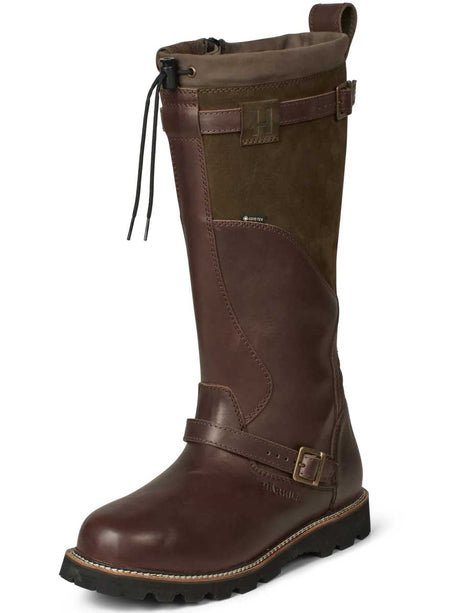


HARKILA Visent 2.0 GTX Boots - Mens - Willow Green / Shadow Brown
Regular price £499.95Unit price


DUBARRY Strokestown Hiking Style Boots - Womens - Mahogany
Regular price £269.00Unit price


ARIAT Traverse Low Waterproof Hiking Shoe - Mens - Brown Bark
Regular price £129.95Unit price


HOGGS OF FIFE Orchy 8" Waterproof Field Boots - Men's - Brown
Sale price £134.95 Regular price £150.00Unit price


MEINDL Peru GTX Boots - Mens Gore-Tex Walking Boots - Brown
Sale price £189.95 Regular price £229.95Unit price


HARKILA Wildwood 2.0 GTX Boots - Ladies - Mid Brown
Regular price £199.95Unit price


 Top Seller
ARIAT Terrain Ease Waterproof Shoes - Mens - Oily Distressed Brown
Regular price £129.95Unit price


 NEW
ARIAT Terrain Trek Waterproof Boot - Mens - Dark Chocolate
Regular price £129.95Unit price


ARIAT Traverse Mid H20 Waterproof Boots - Mens - Blue Depths
Regular price £149.95Unit price


HARKILA Saxnas 7" GTX Boots - Mens - Mid Brown / Orange
Regular price £299.95Unit price


HARKILA Saxnas GTX - Ladies - Willow Green
Regular price £279.95Unit price


MEINDL Bhutan Lady MFS Gore-Tex Walking Boots - Womens - Brown
Sale price £239.95 Regular price £289.95Unit price


MEINDL Peru GTX Boots - Womens Gore-Tex Walking Boots - Brown
Sale price £189.95 Regular price £229.95Unit price


 SALE
30% OFF - HARKILA Saxnas 7" GTX Boots - Mens - Mid Brown - Size: UK 10.5
Very low stock (1 unit)Sale price £195.95 Regular price £280.00Unit price


HARKILA Pro Hunter Ledge 2.0 GTX Boots - Mens - Chocolate Brown
Regular price £329.95Unit price


HOGGS OF FIFE Munro Classic W/P Hiking Boot - Crazy Horse Brown
Sale price £116.95 Regular price £130.00Unit price


ARIAT Traverse Low Waterproof Hiking Shoe - Mens - Blue Depths
Regular price £129.95Unit price


ARIAT Traverse Mid H20 Waterproof Boots - Womens - Blue Depths
Regular price £139.95Unit price


HOGGS OF FIFE Torridon Waxy Leather W/P Trek Shoes - Brown
Sale price £89.95 Regular price £100.00Unit price


 Top Seller
HOGGS OF FIFE Glencoe Waxy Leather W/P Trek Boots - Brown
Sale price £98.95 Regular price £110.00Unit price


